|
 |
Business Strategy · Positioning ·
AI Visibility · Marketing + AI Systems |
|
|
The weekly briefing for
businesses ready for what’s next
Monday
Market Watch
| AI | Search | Marketing | Real-World Insights |
Vol. 4 | Oct 12, 2026 |
|
|
A quick note before we begin
Hi Reader,
Monday Market Watch is back on a Monday—small victories.
I’m still finding my footing here in Houston, but the boxes are mostly unpacked and the office is starting to feel like somewhere I actually work.
While I was busy rebuilding, the systems that answer for your business kept moving. This week they moved in a direction worth paying attention to.
|
|
Last issue I asked who gets to explain your business first. This week, three things moved that question forward.
Google’s September spam update finally finished rolling out—after nearly fourteen days, one of the longest cleanup windows in years.
Google also quietly started testing payments to a small group of publishers for the content AI Mode, AI Overviews, and Gemini are already using to answer on their behalf.
And Gemini 3.8 took over more of the model doing that answering—initially without showing its sources at all.
Put together, that’s an admission: the systems know they’re borrowing your content to speak for you.
The question now is whether they’re accounting for it accurately—or at all.
This week in one sentence
The systems are starting to admit they’re using your content. They’re nowhere close to accounting for it.
|
| The Quick Read |
- → Google’s September 2026 spam update is officially done—13.5 days, among the longest spam cleanups since 2021. Violating sites can lose rankings with no notice and no appeal.
- → Google is piloting payments to roughly 100 publishers for content used in AI Mode, AI Overviews, and Gemini—reportedly about 0.1% of ad revenue—through a new AI Contribution report in Search Console.
- → Gemini 3.8 is now powering more of AI Mode and the new Search Live. It launched without links or citations at all, before Google patched that in.
- → Also moving: a U.S. judge ruled Google’s ad tech business won’t be broken up (behavioral remedies instead), while the EU and UK push their own search-competition fixes.
|
|
|
The 3 things I’m watching
Because context changes everything
|
01
The spam cleanup is over. The reckoning isn’t.
Google confirmed its September 2026 spam update finished on October 8—about 13.5 days, nearly the full two-week window it flagged, and one of the longest spam cleanups since 2021.
Sites that broke the rules can lose rankings or get dropped from results entirely, with no warning and no appeal—unlike a manual action, which at least shows up in Search Console.
Recovery, when it happens, can take months. Any ranking lift from the behavior that triggered it is gone for good.
This is the part worth sitting with: the update enforced existing policy. Nothing new was added. Which means whatever got hit was already breaking a rule that’s been published the whole time.
Quick fix
Open Search Console and check Performance for volatility between Sept 24 and Oct 8. No manual action listed but traffic dropped anyway? That’s the algorithmic kind. Re-read Google’s spam policies against your own site this week, while the update is still fresh.
Read the source →
|
02
Google is starting to pay for what it’s been taking.
Google’s October Search Console updates include a new “AI Contribution” report—tracking how your content gets used inside AI Mode, AI Overviews, and Gemini.
Reporting says Google is piloting actual payments to roughly 100 publishers for that usage, at around 0.1% of ad revenue. Small. But it’s an admission.
For years the working assumption was that AI answers borrow your expertise for free, with no way to even measure how much. Now there’s a report built specifically to measure it.
That doesn’t mean a check is coming for most of us. It means Google is quietly building the infrastructure to someday decide who deserves one—and whoever controls that measurement controls the next version of this conversation.
Quick fix
Log into Search Console and look for the AI Contribution report under Search results. Not there yet for you? Still worth a screenshot of what it shows once it lands—this is the first time Google has shown its hand on AI usage, and it’s worth tracking over time.
Read the source →
|
03
The model answering for you changed again—without its sources.
Gemini 3.8 is now powering more of AI Mode and the new Search Live. Google calls it the most intelligent workhorse model yet.
Here’s the detail that matters more than the upgrade itself: when it first rolled out, it generated answers with no links and no citations at all. Google had to patch that in after the fact.
Think about what that means. For some unknown window, the system explaining businesses to searchers wasn’t showing where its information came from—to anyone, including the businesses it was describing.
The model keeps getting smarter. The evidence trail is still being built after the fact, not before.
Quick fix
Search your business in AI Mode or Search Live this week specifically. Are sources showing now? Click through to one. Does it actually say what the AI claims it says? That gap is where your next piece of proof needs to live.
Read the source →
|
|
|
Do this in 30 minutes
Find out what the AI is actually telling people about you.
|
Minutes 1–10: Run the prompt
Copy this into ChatGPT, Gemini, and Perplexity—run it in all three, not just one:
“I’m a potential customer considering hiring [Your Business Name] for [your main service]. Based on what you can find about them, explain what they do, who they serve, and why I should trust them—and cite your sources.”
Minutes 11–20: Fact-check it like a stranger would
For each answer: is it accurate? Current? Does it name what actually makes you different, or just the category you fit into? Are the sources real, and do they say what the AI claims? Write down every gap—don’t fix anything yet.
|
Minutes 21–30: Close one gap
You won’t fix all of it today. Pick the single biggest gap—a missing result, an outdated offer, a trust signal that isn’t anywhere online—and publish one piece of evidence that closes it: a testimonial, a results page, an updated bio.
That’s one piece of proof the AI didn’t have this morning. Do this every week and the gaps close faster than the models change.
|
|
|
Join me live

Momentum Lab.
Free, live marketing + visibility coaching—every other Monday.
Bring your actual business. We’ll work the problem live—positioning, visibility, what the AI is (or isn’t) saying about you—on a free Zoom coaching call. No pitch, just the work.
Grab a seat →
|
 |
From the field
What I’m seeing inside the work.
|
Watching Gemini ship without citations, then patch them in after the fact, confirmed something I already believed about doing this work with AI: the evidence has to exist before the AI touches it, not after.
If I ask an AI system to summarize a client’s results and it hands back a clean, confident paragraph, my first question isn’t “does this sound good?” It’s “where did this come from, and can I point to it myself?”
If I can’t, it doesn’t go in the case study. It doesn’t matter how convincing the sentence is.
That’s slower. Some weeks it’s a lot slower.
But a citation added after the fact is still a guess that got lucky. I’d rather build the proof first and let the AI describe it—not the other way around.
Christina Rae
|
|
|
On my radar
A few things I’m watching without turning every update into a new project:
- Ad tech ruling: A U.S. judge decided Google’s ad tech business won’t be broken up—behavioral changes under oversight instead. Both DOJ and Google are still fighting over the separate search-remedies case on appeal.
- EU + UK search competition: Google is appealing an EU mandate to share search data with competitors, while the UK’s CMA wants it to make switching search engines easier on Android and Chrome. Different regulators, same underlying question: who gets to control the gateway.
- Search Live: Gemini 3.8 now also powers Google’s new Search Live. I’m not building anything around it yet—just watching whether it becomes another place your business gets explained, badly or well.
|
One question for you
If Google started paying a handful of publishers for the content AI uses to answer about them—would yours even qualify?
Not a hypothetical.
What would the AI actually point to?
Hit reply and tell me →
I read those replies.
|
|
|
From the blog
This week’s news—Google measuring AI usage, Gemini shipping without sources—is really the same thread I keep pulling on: AI can only cite what already exists and is already provable.
That’s the work underneath AI Visibility Excavation™ and Business Archaeology.
What does the business actually know? What can it prove? What’s buried in old documents, scattered systems, client conversations, and the founder’s head—and how much of that is available to anything trying to explain the business, human or AI?
Not a louder version of an unclear story. A story clear enough to hold up when something else is telling it for you.
Read the latest Momentive insight →
I’m Speaking at AI in Motion — Oct 22–24
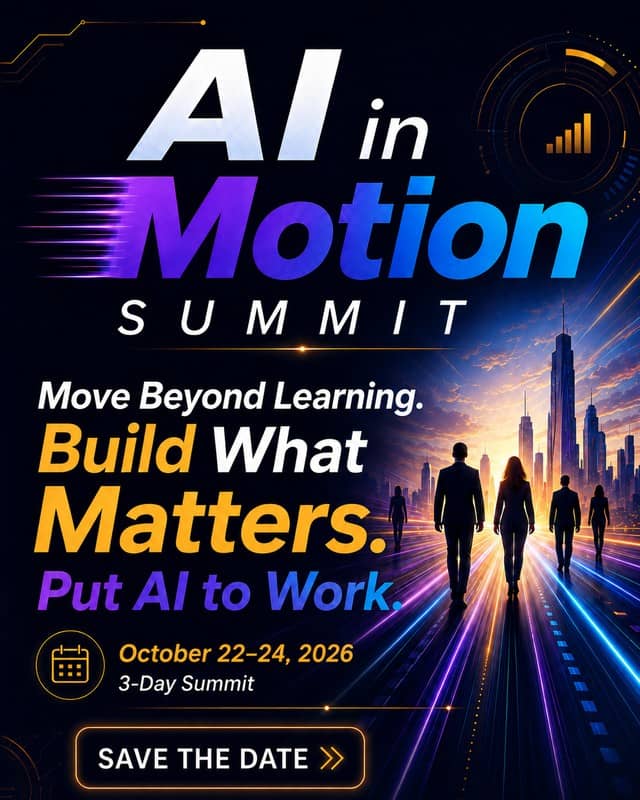
Registration for the AI in Motion Summit (Oct 22–24) is now open via Collab Hub, and I’ll be speaking on The Visibility Paradox—the gap between technically existing online and actually being understood.
You have the website. The profiles. The content. Maybe years of experience and client results.
But when someone—or an AI system—tries to put the pieces together, the picture still isn’t clear.
That’s the conversation I’m bringing to the summit: visibility, authority, evidence, and what it takes to make the substance of a business easier to recognize.
Because being online and being understood are not the same thing.
Register for AI in Motion →
Sources
- PPC Land — Google’s spam update ends after nearly 14 days; violating sites risk demotion
- Search Engine Roundtable — October 2026 Google Webmaster Report: spam update, Gemini 3.8, AI Contribution, monopoly rulings
- Search Engine Land — Gemini 3.8 Flash rolling out in Google Search
- Collab Hub — AI in Motion Summit registration, Oct 22–24
|
|
See you next Monday,
Christina Rae
Founder + Strategist
Momentive Media
Strategy beneath the surface. Visibility built on evidence.
|
600 1st Ave, Ste 330 PMB 92768, Seattle, WA 98104-2246
Unsubscribe · Preferences
|
|
|
|
